USDC on Avalanche is issued directly by Circle. USDC.e is a bridged copy of Ethereum USDC, minted by the Avalanche Bridge before native USDC existed. Both aim to track one US dollar, but they are different tokens with different contracts, backing, and support. USDC.e still works, but it can only leave Avalanche through the bridge, Circle doesn't support it, and most new activity uses native USDC.
Contract addresses
Confirm a token by its contract address, never by its name or logo. Anyone can deploy a token called "USDC".
| Token | Issuer / backing | Avalanche C-Chain contract | Source |
|---|---|---|---|
| USDC | Circle, native issuance | 0xB97EF9Ef8734C71904D8002F8b6Bc66Dd9c48a6E | Circle |
| USDC.e | USDC locked in the Avalanche Bridge | 0xA7D7079b0FEaD91F3e65f86E8915Cb59c1a4C664 | Ava Labs bridge contracts |
Addresses checked November 4, 2026.
Where USDC.e came from
Avalanche's C-Chain launched before Circle issued USDC on it. To bring dollars over, the Avalanche Bridge locked USDC on Ethereum and minted a matching token on Avalanche, marked with a ".e" suffix (the same pattern as WETH.e and WBTC.e).
In late 2021, Avalanche added native USDC issued by Circle. Since then the bridge has switched over: according to Avalanche's support center, it no longer accepts new USDC.e onboarding, bridging Ethereum USDC to Avalanche now delivers native USDC through Circle's Cross-Chain Transfer Protocol (CCTP), and USDC.e can still be offboarded back to Ethereum.
Native vs bridged at a glance
| USDC | USDC.e | |
|---|---|---|
| Issued by | Circle | The Avalanche Bridge, against locked Ethereum USDC |
| New supply on Avalanche | Yes, from Circle and CCTP | No new onboarding through the bridge |
| Circle products | Supported | Not supported |
| Works with CCTP | Yes | No |
| Exit path | Hold, swap, or move with CCTP | Swap to USDC, or offboard to Ethereum |
Why the difference matters
Deposits. Avalanche's support center states that Circle products don't support USDC.e: you can't send it to a Circle deposit address or redeem it through Circle. Exchanges set their own rules for which Avalanche USDC they accept. If you send USDC.e to an address that expects native USDC, recovery depends entirely on the receiving platform. Read the deposit page and send a small test first.
Lending. On lending protocols, each token is its own market with its own rate, liquidity, and risk settings. A protocol may list one, both, or neither. Supplying USDC.e is a different position from supplying USDC, and a debt must be repaid in the token you borrowed. More in Aave vs Benqi.
Liquidity. Dollars coming in through the bridge now arrive as native USDC, while USDC.e can only leave. That tends to leave USDC.e with thinner pools over time, and thinner pools mean more price impact on larger swaps. There's no fixed rate between the two; a quote reflects the pools at that moment.
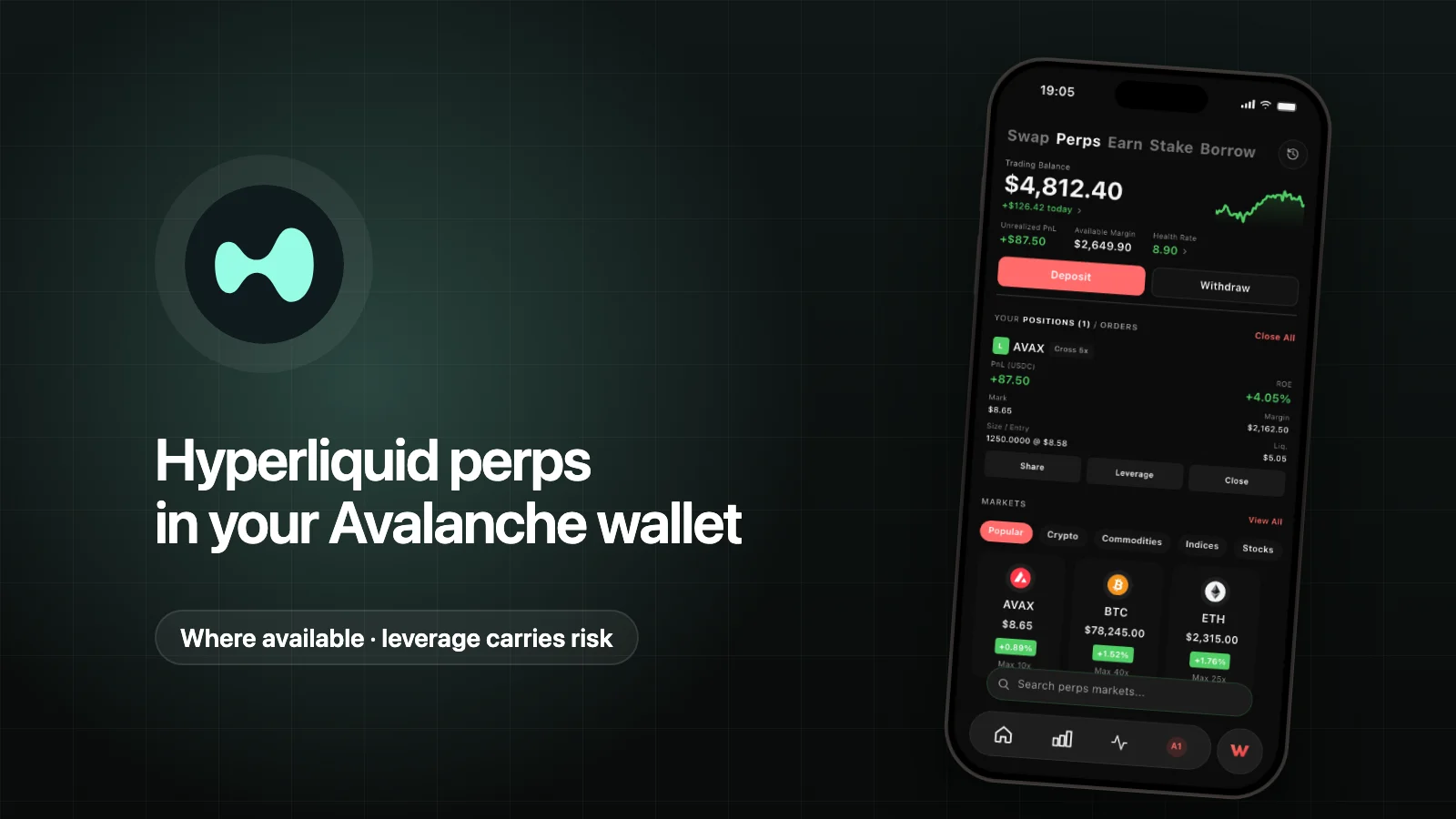
Cross-chain moves. CCTP burns USDC on one chain and mints it on another, and it only works with native USDC. Bridges and routers that use CCTP need native USDC. The same goes for perps in Wyro: the deposit flow moves native USDC from Avalanche to your Hyperliquid account, so swap USDC.e first (Hyperliquid perps from an Avalanche wallet).
How to tell which one you hold
- Symbol. Wallets and explorers usually show the bridged token as USDC.e. That's a hint, not proof.
- Contract. Look up your address on Snowtrace, Avalanche's C-Chain explorer, and compare each token's contract with the table above.
- History. USDC withdrawn to Avalanche from a major exchange today is usually native. Older balances, or funds bridged years ago, are often USDC.e.
In Wyro, native USDC shows as USDC and the bridged token as USDC.e, as separate rows in your balance, each with its own activity history. In the swap token search you can paste a contract address to find a token by address, and turning on Verified only in asset settings hides unverified tokens, which helps filter out look-alikes.
How to convert USDC.e to USDC
Swap on Avalanche (the usual route)
- Keep a little AVAX for gas.
- Choose USDC.e as the token you pay and USDC as the token you receive.
- Check the quote: amount received, price impact, and slippage. Between two dollar tokens the difference is usually small, but not guaranteed to be zero, especially for large amounts.
- Sign and wait for confirmation.
In Wyro, this is Trade → Swap. Quotes come from the Markr routing API, which compares quotes from DEX aggregators on Avalanche. Slippage and price impact are shown before you confirm, and network gas and pool fees are included in the quote. Before you sign, a Tenderly simulation shows USDC.e leaving and USDC arriving. More in how Wyro quotes swaps. Swaps aren't available in the UK, sanctioned regions, or where location can't be determined.
Bridge back to Ethereum
USDC.e offboarding to Ethereum is still enabled on the Avalanche Bridge. You receive USDC on Ethereum and pay Ethereum gas to use it there, so this only makes sense if you want funds on Ethereum. Check the bridge's fees and timing first.
Avoid
- Sending USDC.e to an exchange address that lists only "USDC on Avalanche", unless the exchange explicitly supports USDC.e.
- Trusting a token because its logo looks like USDC.
- Approving unlimited spending to an unfamiliar contract just to convert a stablecoin.
Earning on USDC
If you want stablecoins to earn a variable rate, the Stablecoins category in Wyro Earn lets you supply to Aave V3 or Benqi on Avalanche. Rates come from the protocols and change with demand; Wyro doesn't set them or hold your funds, and withdrawals depend on protocol liquidity. Check that the market is for the USDC you hold before you deposit. See the Earn page.
Risks to keep in mind
- Bridge risk. USDC.e depends on the bridge contracts and the USDC locked behind them. Native USDC removes that layer but still depends on Circle.
- Depeg risk. Both are designed to track one dollar and have tracked it closely, but that isn't guaranteed.
- Swap costs. Price impact, pool fees, and gas apply. Read the quote before you sign.
- Wrong-token sends. Sending a token the receiver doesn't support can mean a slow recovery, or none.
FAQ
Is USDC.e the same as USDC on Avalanche?
No. Both aim to track one US dollar, but USDC is issued by Circle, while USDC.e is backed by Ethereum USDC locked in the Avalanche Bridge. They have different contracts, and exchanges and lending protocols treat them as separate assets.
How do I convert USDC.e to USDC?
Swap USDC.e for USDC on an Avalanche DEX or in a wallet with a built-in swap, such as Wyro. Check the amount received, price impact, and slippage before you sign, and keep a little AVAX for gas.
Can I still bridge USDC.e?
Only out. The Avalanche Bridge no longer accepts new USDC.e onboarding, but offboarding USDC.e to Ethereum is still enabled. Bridging Ethereum USDC to Avalanche now gives you native USDC.
Can I send USDC.e to an exchange?
Only if the exchange explicitly supports USDC.e on Avalanche. Circle products don't, and each exchange sets its own rules. Check the deposit page, or swap to native USDC first.